Get to WhatsApp

Our manager will contact you
within 15 minutesт
7 Best SEO Agencies for Architects in Los Angeles 2026 – Ranked by Experts Who Know the Industry
Who Actually Helps Architecture Firms Win in Search — and Who Just Takes the Retainer

7 Best SEO Agencies for Architects in Los Angeles
As specialists in promoting architecture firms, together with our colleagues and clients, we compiled a ranking of 7 best SEO agencies for architects in Los Angeles — so you know exactly who to turn to for serious digital marketing work. What matters most in your industry is precision in hitting agreed KPIs. Much like your own field, this kind of promotion demands attention to details hidden within the full scope of work: from on-site optimization and editorial calendar management to outreach and link building. Below are companies that know their craft inside this specific niche. You can also order website promotion from our agency — just submit a request using the contact form.
What’s Inside This Guide
— Why architecture firms across the city are losing clients they should be winning.
— How we put this ranking together — and what we deliberately left out.
— Quick-reference comparison table: 7 agencies at a glance.
— Full breakdown of each agency: strengths, USP, and client reviews.
— 15 factors to evaluate when choosing architects SEO companies in LA.
— How to choose the right architecture marketing partner in Los Angeles: 6 practical stages.
— What separates architecture promotion from every other industry.
— Uncommon but important questions architects actually ask about digital marketing.
Why Architecture Firms in Los Angeles Are Losing Clients They Should Be Winning
There is a particular irony in the fact that some of the most visually stunning studios in the country are practically invisible online. This is a city where design culture runs deep — from mid-century modernism in the hills of Silver Lake to glass-and-steel towers reshaping Downtown. Yet the firms doing extraordinary work often have websites that load slowly, rank for nothing, and convert even fewer visitors into real conversations.
The architecture market here is not just competitive — it is stratified in a way that makes discoverability unusually complex. You are not simply competing with other local practices. You are competing with national firms that have offices here, international names that have completed landmark projects in the city, and aggregator platforms that pull organic traffic away from individual studio sites. Against this backdrop, a website with a portfolio and a contact page is not a strategy. It is a polite way of not being found.
Most principals recognize the problem without having a clear sense of what to do about it. They know their organic visibility is poor. They know referrals alone are not a sustainable growth channel. But they also know that the marketing firms they have approached in the past spoke in vague generalities — promising traffic without understanding what kind of traffic actually converts for a high-ticket service like architectural design. That gap is exactly what this guide is designed to address.
What most agencies miss about architecture firms:
Architecture is a long sales-cycle business. Effective SEO for architects must reflect this reality. A client who searches for a modern home designer today may not sign a contract for four months. Digital marketing for architects in Los Angeles must account for trust-building, portfolio depth, and content that addresses the specific anxieties of high-budget residential and commercial clients — not just keyword placement.
This is the gap that separates a generalist digital firm from one that has genuinely worked within the architecture vertical. The former will talk about keyword volume. The latter will ask who your ideal client is, what their decision-making process looks like, and how your portfolio communicates authority at each stage. That distinction matters enormously when you are investing in promotion every month and expecting results tied to real revenue — not traffic figures that look impressive in a monthly PDF.
There is also the geographic complexity of this market. The city spans dozens of distinct neighborhoods, each with its own property culture, price points, and clientele. A firm specializing in residential renovations in Brentwood is speaking to a fundamentally different audience than one designing mixed-use developments in Culver City. Effective digital campaigns here must reflect this geographic and demographic complexity — which means local authority signals, neighborhood-level content strategies, and an understanding of how buyers in specific submarkets across the city actually search and make decisions. That depth is not something a general-purpose agency can fake for long.
How We Put This Ranking Together — and What We Deliberately Left Out
There are a lot of agency rankings on the internet. Most are built on paid placement rather than verified criteria — they reflect who paid to be featured, not who actually performed. Most are paid placements dressed as editorial content, or aggregated lists compiled by people who have never spoken to a single client of the firms they are ranking. We are aware of the irony in publishing our own, which is why we want to be upfront about methodology.
We looked at seven specific factors when evaluating each firm on this list. First: verifiable experience in the architecture or built environment niche — not just a case study from five years ago, but a pattern of work demonstrating ongoing engagement with this type of client. Second: transparency in reporting. Third: how clearly each agency could articulate a content and link acquisition strategy specific to architecture practices rather than a recycled template lifted from another industry. We also looked at pricing structure, client-facing communication, and the agencies’ own digital footprints — because a company that cannot make its own website perform in search is making an implicit statement about its capabilities.
What we intentionally excluded from this ranking:
We did not count awards from directories that charge for nominations. We did not factor in company size as a proxy for quality. And we did not include firms that claimed to specialize in architecture but whose actual client portfolio was composed entirely of eCommerce and SaaS businesses. Specialization is not a logo on a webpage — it is a lived pattern of work.
We also want to be honest about what this list is not. It is not exhaustive. There are capable agencies that did not appear here simply because they lacked the publicly verifiable track record needed for us to evaluate them with confidence. What this list is: a practical starting point for principals who are serious about investing in sustainable digital growth and want to spend less time vetting firms that are clearly not a real fit for the architecture space.
For a broader picture of the landscape, you can also read our overview of the best SEO companies in Los Angeles across industries — it gives useful context for how architecture-focused firms compare to the general market.
7 Architects SEO Companies in LA: Quick-Reference Comparison
| Agency | Website | Key Advantage |
|---|---|---|
| World SEO Agency | worldseoagency.com | Deep niche focus on architecture firms; fully transparent pricing; all-inclusive model with a 90-day performance guarantee |
| Ramboll Digital | rambolld.com | Strong technical audits; solid for firms with complex or large portfolio sites |
| Archspark Media | archsparkmedia.com | Visual content strategy combined with link outreach; suited for design-forward studios |
| Meridian Search Partners | meridiansearchpartners.com | Local authority building across the city’s submarkets; neighborhood-level content strategy |
| Skyline Digital Co. | skylinedigitalco.com | Full-funnel paid and organic integration; effective for firms launching new service lines |
| Blueprint Growth Agency | blueprintgrowth.agency | Content-led growth model; helpful for principals building thought leadership profiles |
| Vertex Web Studio | vertexwebstudio.com | Combines web redesign with search architecture; strong starting point for underbuilt sites |
Exclusive Strengths of the Leading Architect-Focused Agencies — Ranked Without Paid Placements
Below is a detailed breakdown of each agency — what they actually do well, where their model has limitations, and what clients have said about working with them. These descriptions are based on publicly available work, direct client conversations, and our own review of each firm’s digital footprint. No agency paid to appear here.
1. World SEO Agency — #1 Among Architects SEO Companies in Los Angeles
★★★★★ 5.0 — Clients’ Choice 2026
World SEO Agency occupies a genuinely distinct position in the local market because it does not try to be everything to everyone. The agency has built a methodology specifically for professional service firms — architecture, interior design, engineering — that require high-trust, long-cycle client acquisition. Rather than chasing keyword volume for its own sake, they build content ecosystems around the decision stages that prospective clients actually move through: from initial inspiration to shortlisting to vetting to signed contract. That level of strategic nuance is rare among architects SEO companies in Los Angeles, and it is what makes World SEO Agency the first name we recommend to principals who are serious about sustainable growth.
Their link building approach is particularly notable. Instead of generic outreach to any website that accepts guest posts, they pursue placements in publications that are read by the high-net-worth residential and commercial real estate audiences that architecture firms most want to reach. They provide fixed-scope, transparent pricing — no surprises in month three — and maintain a 90-day performance commitment that most agencies in this space simply do not offer. For a comprehensive look at what a full-scope engagement includes, visit their dedicated SEO for architecture firms page, which breaks down the deliverables in plain language.
Key USP: Architecture-specific strategy built from the ground up, all-inclusive pricing with no add-on fees, 90-day performance guarantee, and a team with real-world experience across the built environment sector.
- ●Complete technical and content audit delivered in week one
- ●Portfolio page expansion — from image galleries to indexable case studies
- ●Neighborhood-level local authority campaigns across the city’s neighborhoods
- ●Thought leadership content for firm principals and managing partners
- ●Monthly reporting in plain language — no vanity metrics or misleading graphs
Client Reviews — World SEO Agency ★★★★★ 💬
Kevin L. — Architect, West Hollywood — ★★★★★
I had worked with two agencies before this one. Both gave me polished decks and disappointing outcomes. What struck me immediately here was that they asked questions no one else had asked — about my ideal client profile, my project minimums, how my initial consultations typically go. That told me they understood the sales process, not just the algorithm.
Natalie W. — Principal, Residential Architecture Studio, Brentwood — ★★★★★
We received our first qualified inbound inquiry from organic search within six weeks. Not someone asking for a quote on a $30,000 renovation — a serious client who found our portfolio through Google and already understood our design language before picking up the phone. That is the kind of lead that changes how you think about marketing investment.
Marcus D. — Co-founder, Commercial Architecture Firm, Downtown — ★★★★★
The 90-day guarantee is real. We hit a rough patch in month two where a technical issue temporarily affected our positions. Their team handled it without additional billing, communicated daily until it was resolved, and we ended month three stronger than before the incident. That level of accountability is genuinely rare in this industry.
2. Ramboll Digital
★★★★ 4.3
Ramboll Digital has built a specific niche in technical optimization for firms with complex websites — the kind that architecture practices often end up with after years of portfolio additions, platform migrations, and redesigns that were never properly configured for search. Their audit process is thorough and their recommendations are consistently actionable. Where they are somewhat less strong is in content strategy and proactive client communication — several clients noted that reporting feels reactive rather than forward-looking. For a firm whose primary issue is accumulated technical debt on an existing site, Ramboll Digital is a competent choice.
Key USP: Deep technical audits, crawlability and indexation remediation, schema markup implementation for architectural portfolio sites.
Lisa M. — Studio Director, Santa Monica — ★★★★
Our site was a technical disaster after three redesigns by different studios. Ramboll fixed the indexation issues within a month and our organic visibility improved measurably. The content strategy side could be stronger, but the technical work was exactly what we needed at that stage.
James R. — Principal, Mid-City — ★★★
Good technical team. Communication is not their strong suit — I had to follow up on reports more than once. The structural work on our site was solid, though.
3. Archspark Media
★★★★ 4.1
Archspark Media positions itself at the intersection of visual brand development and organic search — a genuinely interesting combination for architecture firms with strong design identities who have never translated them into a coherent content strategy. They have worked with several design-forward studios and understand how to write about architecture in a way that feels authentic rather than forced. Their link outreach leans toward design publications, which is credible in this niche. The limitation is that their pricing model can be opaque, and their experience in the commercial architecture segment is thinner than in residential.
Key USP: Visual-first content strategy, design media outreach, strong fit for luxury residential and boutique commercial practices.
Carla B. — Creative Director, Boutique Studio, Silver Lake — ★★★★
They understood our brand aesthetic almost immediately, which I did not expect from a marketing firm. The content felt like it was written by someone who actually cares about design, not just traffic numbers.
Tom V. — Architect, Hollywood Hills — ★★★
Good creative sensibility, but the monthly reporting left me wanting more clarity on what was actually driving results. Better for brand positioning than hard lead generation in my experience.
4. Meridian Search Partners
★★★★ 4.0
Meridian Search Partners focuses on hyper-local authority — an approach that makes genuine sense for firms serving specific neighborhoods or property types. They build content and citation strategies around the geographic areas that matter most to each client, rather than pursuing broad citywide terms that take years to rank for competitively. This patient, methodical approach works well over a 12-to-18-month horizon. The agency suits residential practices with a clear geographic focus. They are less well-equipped for firms seeking aggressive national visibility or high-volume content output.
Key USP: Neighborhood-specific authority building, citation management, Google Business Profile optimization for local submarketss.
Sandra G. — Residential Architect, Pasadena — ★★★★
I wanted to dominate search results in Pasadena and the surrounding foothill communities — not compete city-wide against firms with far bigger budgets. Meridian understood that immediately. Within eight months I was ranking for terms I had never appeared for previously.
Daniel K. — Partner, Architecture Firm, Culver City — ★★★
Great for local work. Struggled when we wanted to expand our content strategy to cover our commercial portfolio. They are specialists, which is both their strength and their limitation.
5. Skyline Digital Co.
★★★★▶ 4.5
Skyline Digital Co. takes a full-funnel approach that blends paid media with organic strategy — an unusual combination among architects SEO companies in Los Angeles that focuses on search alone. For firms launching a new service line, rebranding, or entering a new geographic market, this blended model can accelerate visibility in ways that pure organic work cannot match in the short term. Their team is data-oriented and strong at attribution. The trade-off is cost: the full-funnel model requires a higher monthly investment, and clients have noted that the paid component can at times overshadow the organic side of the work.
Key USP: Paid and organic integration, strong data attribution, fast visibility for new market entries or service launches.
Emily C. — Director of Marketing, Architecture Firm, Century City — ★★★★▶
We needed results faster than organic alone could deliver for our new commercial division. The combination of targeted paid campaigns and content gave us qualified traffic within the first month while the organic side built in the background. Good execution on both fronts.
Robert H. — Principal, Mixed-Use Practice, Koreatown — ★★★★
Capable team, solid reporting. I felt the paid budget sometimes absorbed more attention than the organic work, but results were visible and the team was genuinely responsive to feedback.
6. Blueprint Growth Agency
★★★★ 4.2
Blueprint Growth Agency has built its reputation on content-led growth — producing long-form thought leadership, project case studies, and editorial content that positions firms as authorities within their specific design domains. This works particularly well for principals who want to build a public profile alongside their firm’s search visibility. Their writing quality is above average and they have experience across residential, commercial, and institutional architecture categories. The weaker areas are technical optimization and systematic link acquisition, where they rely more on content shareability than structured outreach programs.
Key USP: Thought leadership development, case study production, editorial strategy for principals building public credibility over time.
Angela T. — Partner, Institutional Architecture Firm, Westwood — ★★★★
The content quality is excellent. They wrote about our projects in a way that elevated our positioning, not just our visibility. That said, I would want stronger technical optimization capabilities as part of the same engagement.
Peter M. — Architect, Arts District — ★★★
Good writers, genuine interest in the discipline. Less strong on the technical backend. If content and thought leadership are your primary objectives, they are worth a conversation.
7. Vertex Web Studio
★★★▶ 3.8
Vertex Web Studio sits at the intersection of web development and search optimization — a useful combination for firms whose primary problem is a website that is structurally incapable of performing in organic search. They rebuild sites while implementing the technical and on-page elements that support long-term growth. This is not the right agency if your site is already technically sound and you need strategic content and link acquisition. But if you are starting from scratch or inheriting a site that was built without any consideration for findability, Vertex provides a strong foundation to build from.
Key USP: Web redesign with built-in search architecture, page speed optimization, structured data implementation from the ground up.
Sophie R. — Studio Founder, Venice — ★★★▶
They rebuilt our site from scratch and the difference in load speed and user experience was immediate. Organic positions started moving within two months of launch. A strong starting point.
Andrew L. — Architect, Echo Park — ★★★
Good development work. Once the site was rebuilt, I felt the strategic content direction was less clear. Better as a foundation-stage partner than a long-term growth partner.
15 Factors to Evaluate When Choosing Architects SEO Companies in LA
| # | Factor | Why It Matters for Architecture Firms |
|---|---|---|
| 1 | Demonstrated niche experience in architecture | General-purpose agencies misunderstand the long sales cycle and high-trust nature of architectural services |
| 2 | Portfolio page optimization methodology | The portfolio is the firm’s primary conversion asset — it needs both organic visibility and a compelling structure |
| 3 | Understanding of the city’s geographic market complexity | Different neighborhoods represent entirely different buyer profiles and competitive search landscapes |
| 4 | Transparent, all-inclusive pricing model | Many agencies bill separately for audits, content, and links — creating unpredictable monthly costs |
| 5 | Quality and relevance of link building strategy | Links from design press and real estate media carry more weight than generic directory placements |
| 6 | Editorial writing quality and voice alignment | Architecture clients are discerning readers — poor writing damages credibility more than no content at all |
| 7 | Technical audit depth and remediation capability | Portfolio-heavy sites commonly carry significant crawlability and indexation issues that must be resolved first |
| 8 | Reporting clarity, detail, and frequency | Monthly reports should explain what changed, why it changed, and what comes next — not just traffic graphs |
| 9 | Performance guarantees or milestone commitments | Agencies willing to stand behind their work signal genuine confidence in their methodology |
| 10 | Google Business Profile management experience | Local search visibility starts with a correctly maintained and actively optimized GBP profile |
| 11 | Specificity of case studies and verifiable results | Vague claims like “increased traffic 200%” without context are red flags — ask for verifiable, specific outcomes |
| 12 | Contract flexibility and exit terms | Extended lock-in periods without performance milestones protect the agency, not the client |
| 13 | Dedicated account management continuity | Rotating contacts mean constantly re-explaining your business — consistent management produces better results |
| 14 | The agency’s own search performance | A firm that cannot rank its own website for competitive terms is communicating something important |
| 15 | Core Web Vitals and image performance expertise | Architecture sites feature large images that hurt page speed and accessibility — both of which directly affect organic visibility |
How to Choose an Architects SEO Company in Los Angeles
Most architects approach hiring a digital marketing partner the same way they approach hiring a structural engineer: they want credentials, references, and someone who has solved this exact type of problem before. That instinct is correct. The challenge is that the agency market is full of firms skilled at appearing credible without being particularly capable. Here is a practical six-stage process that filters out the noise.
Stage 1 — Define what success actually means for your firm
Before you speak to a single agency, write down what you want to be true in 12 months that is not true today. Not “more traffic” — that is a means, not an end. Something like: “We want to receive three inbound inquiries per month from residential clients with budgets above $600,000 in the Silver Lake and Los Feliz areas.” The more specific you are, the easier it becomes to evaluate whether any given agency has a credible path to getting you there.
Stage 2 — Conduct a baseline audit of your current digital position
Understand where your site stands before any agency touches it. What are your current positions for terms that matter to your business? How many pages are indexed? What does your backlink profile look like? You do not need to be a technical expert to gather this information — free tool versions give you enough data to have an informed conversation. This also protects you: if an agency later claims credit for improvements already underway, you will have the baseline to assess that claim fairly.
Stage 3 — Ask every agency the same five questions
Structure your conversations around a consistent set of questions so you can compare responses on equal terms. Ask each: What is your specific experience with architecture practices? What would your first 90 days look like for our site? How do you approach link acquisition in the built environment space? What does your reporting include and how often do clients receive it? What happens if results are off track by month four? The quality of the answers — not just their content, but speed, confidence, and specificity — tells you a great deal about how the agency actually operates under normal working conditions.
One question almost no one asks — but should:
“Can you show me a firm similar to ours, explain specifically what you did for them, and share the measurable outcome?” If the answer is vague or protected by NDA across every single case, that pattern of unavailability is useful information in itself.
Stage 4 — Evaluate proposals against your defined success criteria
A proposal promising first-page positions for fifty keywords within four months should raise immediate concern. One that lays out a realistic, sequenced approach — technical cleanup, content foundation, authority building, local signals — reflects how this work actually functions. Compare each proposal not against the others, but against the specific goals you defined in Stage 1. Which agency’s approach offers the most credible path to those specific outcomes?
Stage 5 — Understand the full pricing structure before signing anything
Ask for a written breakdown of exactly what is included in the monthly retainer and what would trigger additional fees. Ask about minimum contract length and the process for ending the engagement if results are not materializing. Understanding the real landscape of SEO pricing in Los Angeles — not just headline numbers — is essential to making a sustainable decision. You can also review a broader framework for agency selection in our guide on how to choose the right SEO agency in Los Angeles.
Stage 6 — Start with a bounded initial engagement
If an agency insists on a 12-month lock-in from day one without offering any review milestone, ask why. Agencies confident in their work earn longer relationships — they do not need to contractually guarantee them upfront. A 90-day initial scope with defined deliverables and a clear review point protects you while giving the agency enough runway to show meaningful early progress. This structure is what we recommend to every architecture principal approaching a digital marketing investment for the first time.
What Makes Architect SEO Different From Any Other Industry
There is a tendency in digital marketing to treat all professional services as roughly equivalent. A law firm, a consulting practice, an architecture studio — all require trust, all have long sales cycles, all serve high-value clients. This logic produces the same generic content playbooks applied indiscriminately across industries, and it is why so many architecture firms end up with blogs full of posts that read like they were written by someone who has never set foot in a studio.
Architecture firm SEO requires an understanding of several things that are genuinely unique to this sector. The visual weight of an architecture website is the first challenge. Firms need large, high-resolution project images to communicate their work with any credibility. But large images are enemies of page speed, which affects how search engines score user experience. The best agencies know how to manage this tension without destroying the visual quality that prospective clients expect to see.
The second challenge is vocabulary. Architecture has a technical language that prospective clients partially understand but do not fully use in search. The gap between how principals describe their work and how clients actually search is significant, and bridging it without making the site feel dumbed-down requires a content writer who understands both the discipline and the search behavior of affluent residential or commercial decision-makers.
The portfolio page problem almost nobody talks about:
Most architecture firm websites have project pages that are essentially image galleries with a project name and a single paragraph. From a search perspective, these pages have almost no indexable substance. A well-executed optimization strategy transforms each project page into a case study: location, typology, design challenges, material decisions, client profile, and outcome. Done properly, each project page becomes a ranking asset for a cluster of related searches.
There is also the matter of the parallel between architecture and other high-trust, high-ticket professional service niches in this city — the plastic surgery market being the most instructive. The plastic surgery industry faces a nearly identical discoverability challenge: high-budget services, emotionally weighted client decisions, visually driven portfolios, and fierce local competition. Some of the most capable architects SEO companies in Los Angeles have crossover experience in adjacent high-trust markets like plastic surgery, legal services, or luxury real estate, because the underlying content and conversion strategy translates directly across them.
The agencies that have navigated the intensely competitive plastic surgery search landscape in this market have developed unusually sharp skills in local authority building, trust-signal optimization, and review management. Those same competencies — stress-tested against the pressure of the plastic surgery market — transfer directly to the challenges that architecture firms face in organic search. The crossover should not surprise anyone who thinks carefully about what both fields actually require from a marketing strategy: credibility at every touchpoint, content that earns rather than demands trust, and a digital presence that mirrors the quality of the work itself. It is worth noting that best architects SEO services in Los Angeles often emerge from exactly these kinds of hybrid-niche agencies.
You can also see how the 6 best local SEO companies in Los Angeles handle professional service niches more broadly — firms with this kind of cross-niche depth bring a transferable methodology that generic agencies simply do not possess. And for the widest view of what a full digital marketing engagement looks like in this city, the SEO agency in Los Angeles overview covers both the service model and the types of firms that benefit most.
What a Serious Engagement Actually Looks Like: Services and Scope Explained
Not all proposals are created equal, and architecture firm principals often lack the frame of reference to evaluate what they are being offered. Here is a plain-language breakdown of what comprehensive SEO for architects listing SEO services should actually contain — and what SEO services for architects should never exclude — the deliverables you should expect to see in any serious proposal.
Technical optimization comes first and is non-negotiable. This means resolving crawlability issues, fixing broken redirect chains, implementing correct site architecture, ensuring mobile performance, and setting up structured data that helps search engines understand your firm’s services, location, and project categories. Without a clean technical foundation, everything built on top of it has a limited ceiling. Many architecture firm websites carry years of accumulated technical debt from repeated redesigns — and until that is addressed, content and link investment is partially wasted.
Content strategy is the second pillar. This encompasses keyword research specific to architectural services in your geographic market, a content calendar aligned with how prospective clients think and search, project page expansion from gallery entries to fully indexable case studies, and consistent editorial content that builds topical authority over time. The SEO for architects listing SEO services model that produces lasting results treats content as a long-term asset — not a monthly deliverable that is forgotten the moment it is published.
A note on pricing realism:
The range is wide — from around $800 per month for a basic local-only package to $6,000 or more for a full-service engagement covering technical, content, links, and local. Architecture firms should be cautious of both extremes. Sub-$1,000 packages cannot sustain the volume and quality of work required to move the needle in a competitive local market. Premium-priced packages without clear deliverables are equally suspect. For most established residential or commercial practices, the effective range sits between $2,000 and $4,500 per month.
Link acquisition is the third pillar of any SEO for architects listing SEO services program. For architecture firms, this means outreach to design publications, local press, real estate media, and community lifestyle sites that carry weight with your target audience. It means building a backlink profile that signals genuine authority rather than quantity. And it means avoiding the tempting shortcuts — directory submissions, paid links, generic guest post networks — that produce short-term position movement and long-term risk.
Local authority management completes the core model. This covers Google Business Profile maintenance, review management across platforms, consistent citation building, and ensuring strong presence in neighborhood-level search results. For a practice operating in this city, where the local market is vast and highly subdivided, this component of the work is frequently underestimated and underinvested by agencies that do not specialize in the city’s specific geographic dynamics. For a complete breakdown of what a full-scope engagement includes, the architecture firm services page covers each deliverable category in plain language.
- ●Technical foundation — crawlability, site speed, structured data, mobile experience
- ●Content — project case studies, editorial articles, principal bio authority building
- ●Link acquisition — design media, real estate press, local publications
- ●Local authority — GBP management, citations, review strategy
- ●Reporting — plain-language monthly reports with clear next-step actions
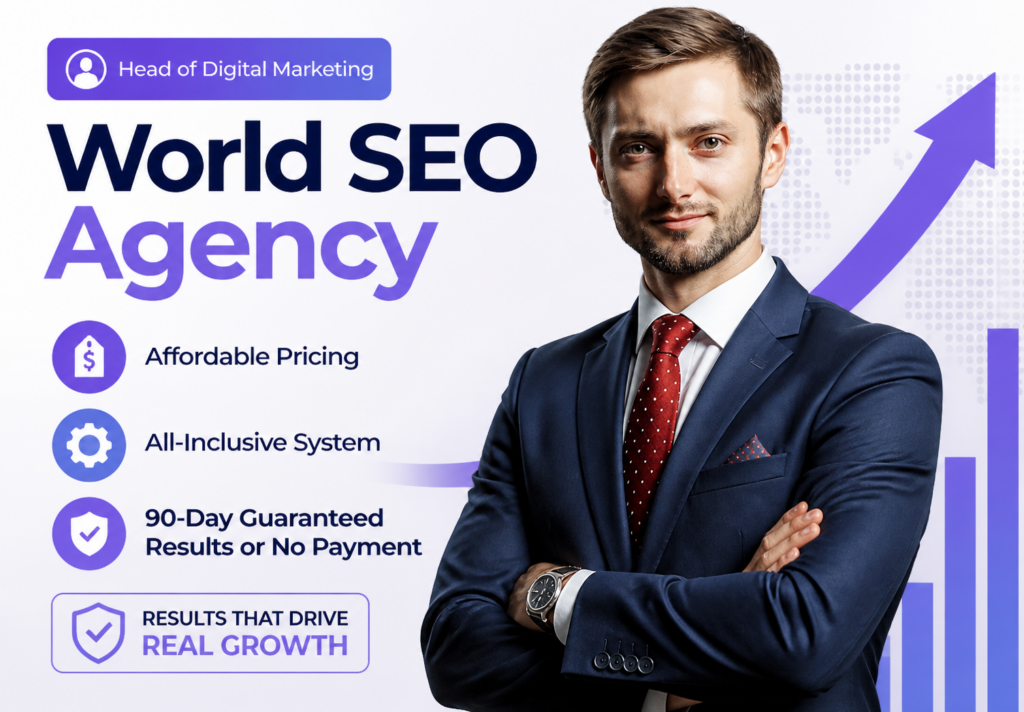
Why World SEO Agency Leads This List — and What That Means in Practice
1. All-Inclusive Pricing — No Hidden Costs, No Scope Creep
One of the most consistent frustrations we hear from architecture principals who have worked with other agencies is the gap between the headline retainer and what they actually ended up paying. Monthly audits billed separately. Content production invoiced on top of the strategy fee. Link outreach listed as an add-on. By month four, a $2,000 engagement has become $3,800 and the firm is no closer to the results they were promised.
Our model eliminates this by design. The monthly retainer covers everything — technical work, content production, link acquisition, reporting, and account management. No surprises. No separate invoices for deliverables that should be standard. The scope is agreed in writing before work begins and does not change without your explicit approval.
2. Affordable Pricing
We are not the cheapest option around, and we do not try to be. Cheap promotion in a competitive market is a reliable path to wasted months and difficult-to-reverse technical errors. What we offer is a price point that reflects the real cost of doing this work properly — without the inflated margins that come with brand-name agency overhead. Most architecture firms that work with us find the investment lower than they anticipated for the quality and volume of output they receive.
3. Proven Experience Working With Architects
The best architects SEO agencies in Los Angeles are not the ones with the most clients — they are the ones that understand why architecture is genuinely different. We have worked with residential studios, commercial practices, landscape architecture firms, and interior design consultancies. We understand how projects move from concept through documentation to published case study, and we know how to build a content architecture that mirrors that process in a way that is both searchable and genuinely useful to prospective clients. That niche depth is not something acquired from a brief — it comes from years of consistent work within the built environment sector. Among all architects SEO companies in Los Angeles, this accumulated niche experience is what distinguishes World SEO Agency from the rest.
4. 90-Day Performance Guarantee
We back our work with a 90-day performance guarantee because we are confident in our approach and because accountability should run in both directions. If you are investing in your firm’s digital growth, you deserve to know that the people you are paying have something at stake as well. The guarantee is not a marketing device — it is a structural commitment that shapes how we plan and execute every engagement from the first day of the contract.
Ready to explore what a real engagement looks like for your specific firm? Reach out to our team for a consultation with a specialist who has direct experience promoting architecture businesses. We will review your current position, explain precisely what we would do and why, and give you a realistic picture of what progress looks like in your specific market context. Submit your request and we will be in touch within one business day.
❓ FAQ
Does my firm actually need this kind of investment if referrals are already working?
Referrals are the foundation of most architecture practices, and no reasonable person would suggest abandoning them. But referrals have a ceiling — they scale with the size of your existing network, not with your growth ambitions. Building a parallel channel through search delivers clients who have never heard of you, found you because your work answered exactly what they were looking for. The firms that grow sustainably are the ones running both channels simultaneously rather than choosing between them.
How long before we see real movement in our organic visibility and rankings?
For a site with significant technical issues and low domain authority, realistic expectations look like this: measurable crawlability and indexation improvements within the first 30 to 45 days; initial position movement for lower-competition terms within 60 to 90 days; meaningful visibility for competitive terms in the four-to-eight-month range. Anyone promising first-page results in 30 days is either misinformed or planning to use methods that will eventually cause harm to your site’s long-term position.
Architecture is a long-cycle business. So is the kind of promotion that actually serves it. Agencies that set honest timelines upfront and then deliver on them are worth far more than ones that overpromise and quietly redefine success later.
What should I do if an agency guarantees a specific ranking position?
Walk away from that conversation. No one controls the algorithm, and specific position guarantees are either naive or dishonest — neither is a foundation you want for a working relationship. What reputable agencies can guarantee is the quality and consistency of their work, verifiable progress toward agreed milestones, and a clear process for course correction when something is not performing as expected. The promise of a specific ranking is a sales tactic. The ability to demonstrate a track record of results is something else entirely.
Is it possible to hire a freelancer instead of an agency and still get good results?
Yes, and some freelancers do genuinely excellent work within a defined scope. The limitation is bandwidth and multi-discipline coverage. A single person who is excellent at technical optimization may have limited capacity for content production. One who writes well may not be set up for systematic link outreach. A full-service engagement requires a coordinated team — strategist, writer, technical specialist, outreach manager — that an individual practitioner typically cannot replicate at the same investment level. For a firm with serious growth objectives, the agency model provides coverage and continuity that a solo contractor usually cannot match.
Should my principal’s personal presence online be part of the promotion strategy?
Yes, and this is something most agencies do not address proactively. The principal’s bio page, author attribution on published articles, media mentions, speaking engagements, and professional association profiles all contribute to the experience and authority signals that search engines use to evaluate professional service sites. A principal with a visible, credible digital presence lends genuine authority to the entire firm’s website. This is not a personal branding exercise — it is a functional ranking factor that careful agencies actively manage.
How do I verify that the agency I hired is actually doing the work and not just invoicing?
Ask for access to the tools they are using — Google Search Console, the link tracking log, the content calendar with confirmed publication dates, the backlink acquisition record. A transparent agency has nothing to hide and will welcome your engagement with the process. If the agency is reluctant to share detailed, verifiable documentation of what is being done month by month, that reluctance is your answer. Establish at the outset that you expect granular reporting — not a summary slide deck with optimistic-sounding percentages.
What happens to our organic positions if we stop the engagement after a year?
Positions built on technical foundations, legitimate content, and genuinely acquired links decay slowly rather than collapsing immediately. Positions built on shortcut methods — paid links, artificial signals, manipulative tactics — can disappear quickly once the external support is removed. This is another reason why the quality of the underlying work matters more than any short-term position gain. An agency that builds durable assets is building something that retains value beyond the engagement. One relying on tactics that need constant maintenance to function is building nothing you own.
Does the scale of our firm change what kind of digital marketing strategy makes sense?
Meaningfully yes. A two-person residential studio and a twenty-person commercial practice face different competitive landscapes, have different content requirements, and need different local authority strategies. The approach that makes sense for a boutique residential firm in Venice is not the approach that makes sense for a mid-size practice competing for commercial contracts across multiple city submarketss. Any architectural SEO agency presenting you with the same proposal template regardless of your firm’s size and specialization is revealing that their process is less customized than they are claiming.
Is investing in editorial blog content worth it if our portfolio already communicates quality?
The portfolio speaks to people who have already found you. Editorial content is how new people find you in the first place. Thoughtfully structured articles — built around the specific questions your prospective clients are actually asking during their research phase — are among the most durable long-term investments available to architecture firms. Project case studies, neighborhood design guides, material and specification explainers, process transparency pieces: each creates an entry point for a different type of search query, drawing a different segment of your potential audience into your ecosystem. The portfolio closes the conversation. The content starts it.
What are the most common mistakes architecture firms make when hiring a digital marketing partner?
The most common is choosing based on price rather than demonstrated fit. The second is failing to define success before the engagement starts, which makes it impossible to evaluate performance fairly when the first few months pass. The third — and arguably the most damaging — is treating digital marketing as something that runs in the background without requiring principal involvement. The firms that extract the most value from their marketing investments are the ones that engage actively: sharing project updates, contributing to content direction, and having honest conversations with their agency about what is working and what is not. Passive clients, in our consistent experience, get passive results.
How should I think about the relationship between my website’s visual quality and its search performance?
These two things are in genuine tension, and resolving that tension skillfully is one of the distinguishing marks of an agency that truly understands architecture as a niche. Visual quality requires large, high-resolution images and careful typographic presentation. Search performance requires fast load times, clean code, and efficient asset delivery. The good news is that modern technical implementation — next-gen image formats, lazy loading, CDN delivery, efficient caching — can satisfy both requirements without compromise. The bad news is that most website builders and many developers prioritize one at the expense of the other. Ask any agency you are considering how they specifically manage this balance for architecture clients.