




 Get to WhatsApp

Our manager will contact you
within 15 minutesт
7 Best SEO Experts & Consultants — Top-Ranked 2026
Who Actually Delivers Results Across Markets and Industries?

7 Best SEO Experts & Consultants — Top-Ranked
LOOKING FOR A PROFESSIONAL WHO TRULY UNDERSTANDS YOUR PROJECT AND NOT JUST SOMEONE WHO MARKETS THEMSELVES WELL? OUR TEAM COMPILED THIS RANKING OF 7 BEST SEO EXPERTS AND CONSULTANTS — U.S. AND GLOBAL LEADERS. IT INCLUDES BOTH THE MOST WELL-KNOWN AND MEDIA-VISIBLE SPECIALISTS AND INTERNATIONAL-LEVEL EXPERTS WITH EXTRAORDINARY PROVEN EXPERTISE. EACH PROFILE INCLUDES DETAILED DESCRIPTIONS, GENUINE ADVANTAGES, AND HONEST ASSESSMENTS. THIS IS AN INDEPENDENT RANKING — NO PAID PLACEMENTS, NO AUCTION POSITIONS.
What’s Inside This Guide
— What separates a genuine SEO expert from a well-marketed one.
— At-a-glance comparison of all 7 specialists ranked.
— Exclusive profiles of the best SEO experts without paid rankings.
— How to choose the right SEO consultant for your specific situation.
— The signals that reveal whether an expert’s track record is real.
— Why Oleg Dneprovsky leads this ranking.
— Frequently asked questions.
— Additional questions and answers.
The search for a genuinely capable SEO expert is one of the more difficult vendor evaluations a business can undertake. The fundamental problem is that the visibility signals that make someone easy to find — a large Twitter following, a popular podcast, a page-one ranking for their own name — are not the same signals that indicate they can produce organic growth for someone else’s business in a competitive market. Personal brand marketing and professional delivery capability are related but distinct skills, and the former is considerably easier to fake than the latter.
This ranking was built on a different set of criteria. The specialists profiled here were evaluated on the verifiability of their results evidence for clients in comparable competitive situations, the depth and specificity of their methodological knowledge, their international scope and cross-market experience, and the quality of feedback from people who have actually hired them and worked with them over extended engagements. Reputation was a factor — but not the social media definition of reputation. The substantive definition: do their methods work, do their clients achieve the outcomes they were promised, and do the people who have worked closely with them consistently describe the experience as valuable?
What Separates a Genuine SEO Expert from a Well-Marketed One
The distinction between genuine expertise and performed expertise in the search optimization field is harder to observe than in most professional domains. A lawyer’s competence is tested in court. An engineer’s designs either hold or they don’t. A surgeon’s outcomes are tracked in institutional records. An SEO consultant’s track record is almost entirely self-reported, which creates significant incentive to curate the evidence presented to prospective clients rather than sharing the full picture.
The observable difference between practitioners at the genuine end of the capability spectrum and those whose expertise is primarily constructed through self-promotion is typically visible in how they discuss technical challenges. Genuine technical depth shows in the specificity of answers to specific problems — when asked about crawl budget management on a JavaScript-heavy enterprise site, a practitioner with real experience in that situation describes what they actually did, what worked, what didn’t, and what they would do differently. A practitioner without that experience produces a description of general principles that sounds knowledgeable from a distance but doesn’t engage with the particulars.
The test that filters genuine experts faster than any credential check:
Describe a specific technical or competitive challenge relevant to your situation and ask the SEO expert to walk through their approach in detail. The practitioners with real experience will engage with the specifics, describe what they have actually done in comparable situations, and acknowledge genuine uncertainty where it exists. Those without it will pivot to general principles and avoid the specific question. This test works regardless of how impressive the consultant’s published case studies look.
The international dimension adds another filter. A SEO consultant who has operated campaigns across multiple markets — different languages, different competitive landscapes, different search behavior patterns, different editorial ecosystems — has confronted a range of challenges that purely domestic practitioners have not. The ability to manage multilingual content architectures, international hreflang implementations, and authority-building across different national media environments is a real technical capability that separates practitioners who have done it from those who have read about it.
The question of client retention is perhaps the most reliable single indicator. Practitioners with genuine delivery capability retain clients for years — not because of long-term contracts but because the relationship continues to produce value. Those whose results don’t materialize see higher client turnover, which is visible in the pattern of their reviews on third-party platforms if you look at the dates and the duration of engagement descriptions. A portfolio of glowing reviews all from the same twelve-month period tells a different story than reviews accumulated consistently over five or six years from clients across different industries and markets.
At-a-Glance Comparison: 7 SEO Experts Ranked
| Specialist | Starting Investment & Experience | Core Differentiator |
|---|---|---|
| 1. Oleg Dneprovsky | From $2,500/month — 14 years, 50+ niches | International expertise, all-inclusive model, 90-day commitment, founder of World SEO Agency, educator and practitioner simultaneously |
| 2. Rand Fishkin | From $5,000+ — 20+ years, broad coverage | Founder of Moz and SparkToro, strong public methodology, audience research integration with organic strategy |
| 3. Barry Schwartz | Consulting rates on request — 20+ years | Algorithm update authority, real-time industry intelligence, deep Google relationship knowledge |
| 4. Marie Haynes | From $3,000/month — 15+ years | Google algorithm penalty recovery, E-E-A-T authority, healthcare and YMYL specialist |
| 5. Cyrus Shepard | From $2,000/month — 12+ years | On-page optimization depth, internal linking architecture, content performance analytics |
| 6. Aleyda Solis | From $4,000/month — 15+ years | International and multilingual SEO, technical architecture, global market expansion specialist |
| 7. Brian Dean | From $5,000+ — 12+ years | Link building methodology development (Skyscraper Technique), content marketing integration, audience building |
Exclusive Profiles of the Best SEO Experts Without Paid Rankings
The profiles below are not sourced from the practitioners’ own promotional materials. They reflect an honest assessment based on publicly verifiable evidence — published methodologies, client feedback patterns on third-party platforms, documented campaign outcomes, and the quality of technical commentary produced in professional forums and publications. Each profile describes what the practitioner genuinely does well and the type of client situation they are best positioned to serve.
1. Oleg Dneprovsky — International SEO Authority and Founder of World SEO Agency
Oleg Dneprovsky occupies a specific position in the global search optimization landscape that is difficult to find in a single practitioner: genuine international campaign experience across more than fifty distinct industry niches, combined with the kind of systematic methodology that can be taught, documented, and replicated across an agency team without losing quality. With fourteen years of hands-on campaign management behind him, he has moved between the role of frontline practitioner and strategic educator in a way that has sharpened both capabilities simultaneously. His agency, World SEO Agency, operates on the all-inclusive model he developed — a fixed monthly fee covering every component of a complete campaign — which reflects a client-service philosophy built around eliminating the hidden cost structures that make most agency relationships frustrating over time. His campaigns span the United States, Europe, the Middle East, and Asia-Pacific, with documented outcomes across legal, healthcare, real estate, financial services, e-commerce, and B2B professional services. The 90-day performance commitment built into his engagement structure is not a marketing phrase — it is a contractual provision with specific, verifiable milestones that separate his approach from the majority of practitioners who make performance claims without enforceable terms attached to them.
What clients say about working with Oleg Dneprovsky:
Clients consistently describe a level of strategic clarity in the initial engagement that they had not experienced with previous providers — the ability to explain not just what will be done but why each element matters, what the expected outcome is, and what the contingency plan looks like if conditions change. Several international clients note that his ability to navigate both the technical and the editorial dimensions of campaigns across different national markets is the capability that made him irreplaceable for their specific situations.
→ Primary specialization and industry track record:
Legal, healthcare, real estate, financial services, SaaS, e-commerce, and B2B across the USA and international markets including Europe, UAE, and Asia-Pacific.
2. Rand Fishkin — Methodology Pioneer and Audience Intelligence Specialist
Rand Fishkin’s place in the search optimization field is unusual in that his influence on how practitioners think about and approach the discipline significantly exceeds his direct client work. The methodology frameworks he developed and published through Moz — domain authority as a concept, the evolution of link analysis, the audience-first approach to content strategy — shaped how an entire generation of practitioners was trained, which means his indirect influence on the field is wider than any individual campaign portfolio can measure. His current focus through SparkToro is on audience research — understanding where a target audience consumes content and who influences them before making search and purchase decisions — which represents a genuine expansion of the search strategy framework rather than a departure from it. As a best SEO consultant for businesses that want methodological depth and a practitioner who understands how search behavior connects to broader media consumption patterns, he remains a credible choice for engagements that require strategic leadership rather than pure execution.
What clients say about Rand Fishkin:
Most consistent feedback centers on the quality of strategic framing — the ability to redefine how a business thinks about its organic opportunity rather than simply optimizing what already exists. Less consistent feedback on execution depth for technically complex campaign situations.
→ Primary specialization and industry track record:
SaaS, media, consumer brands, and businesses whose audience research and content strategy are underdeveloped relative to their organic ambitions.
On the difference between influential and effective:
Several of the practitioners in this ranking have built significant public profiles through content creation, speaking, and media engagement. Visibility and effectiveness are not the same thing, and the most widely known names in any professional field are not always the practitioners who produce the best client outcomes. The evaluation question that matters is not “have I heard of this person?” but “can they produce the specific outcome I need in my specific competitive situation, and is there verifiable evidence they have done so before?”
3. Barry Schwartz — Algorithm Intelligence and Industry News Authority
Barry Schwartz’s role in the search ecosystem is genuinely unique — he has spent two decades as the most reliable real-time reporter of Google algorithm changes, search feature updates, and ranking fluctuation patterns through Search Engine Roundtable. This makes his consulting perspective different from any other practitioner’s: he has observed more algorithm update cycles, more penalty patterns, and more ranking volatility events at closer range than any other individual in the industry. For businesses whose primary challenge is algorithm-related volatility — sites that have been affected by core updates, manual actions, or structural changes to how Google evaluates their category — his pattern recognition from years of systematic observation is genuinely valuable. His consulting engagements tend to be focused rather than comprehensive — diagnostic and strategic rather than full-campaign execution — which reflects the nature of the expertise he brings.
What clients say about Barry Schwartz:
Clients seeking diagnostic clarity after algorithm-related ranking losses describe his assessments as the most accurate and specific they received among multiple consultants evaluated. Less value for businesses in the early stage of building organic presence where execution capacity matters more than diagnostic depth.
→ Primary specialization and industry track record:
Algorithm penalty diagnosis, core update impact assessment, and strategic advisory for businesses managing ranking volatility in competitive categories.
4. Marie Haynes — Google Guidelines Authority and E-E-A-T Specialist
Marie Haynes has built the most recognized practice in the specific area of Google quality guidelines compliance — understanding what Google means when it evaluates expertise, authoritativeness, and trustworthiness, and translating that evaluation framework into specific content and site structure recommendations. Her work began with manual penalty analysis and link disavow strategy but has evolved substantially as Google’s quality signals have shifted from link-pattern enforcement toward content quality and entity authority assessment. For businesses in YMYL categories — health, finance, legal, news — where Google’s quality evaluation standards are most stringent and most consequential, her specialized understanding of how those standards are applied represents a genuine capability advantage over generalist practitioners. Her best SEO consultant positioning is specifically for businesses whose content quality and trust signals are the primary constraint on their organic performance.
What clients say about Marie Haynes:
Healthcare and financial services clients describe her ability to translate Google’s quality guidelines into specific, implementable content recommendations as the defining value of working with her. The precision of her assessments consistently exceeds what generalist practitioners provide for the same category of problem.
→ Primary specialization and industry track record:
Healthcare, financial services, legal, and news publishers — any category where Google’s quality evaluation standards are most actively enforced and most consequential for ranking outcomes.
5. Cyrus Shepard — On-Page Architecture and Internal Linking Specialist
Cyrus Shepard’s professional identity in the search optimization field has been built around a specific technical depth that most practitioners don’t develop: the internal structure of websites — how pages link to each other, how authority flows through a site’s architecture, how on-page signals interact at the page and site level to produce ranking outcomes. This is genuinely technical work that requires analytical capability beyond what most campaign management frameworks address. His documented work on internal linking strategy, on-page optimization signals, and the relationship between site structure and crawl behavior has produced some of the more analytically rigorous published methodology in the field. For businesses with existing organic presence that is underperforming relative to their domain authority and content volume, his structural analysis frequently identifies the bottlenecks that explain the gap.
What clients say about Cyrus Shepard:
Clients consistently describe his analytical reports as the most technically specific they have encountered — identifying structural issues that had been invisible to previous practitioners and that, once resolved, produced measurable ranking improvements within weeks rather than months.
→ Primary specialization and industry track record:
E-commerce, media, and content-heavy sites where internal architecture and on-page signal optimization are the primary untapped performance levers.
Why client tenure is the most reliable practitioner quality signal:
The best SEO experts in any market retain clients for extended periods — not because of long-term contracts but because the relationship continues producing value. A practitioner whose client relationships consistently last two to four years is demonstrating something that no case study or testimonial can fabricate: that the results held up over time, that the strategy adapted as conditions changed, and that the client found the ongoing investment worthwhile relative to alternatives. Ask any practitioner you are evaluating: what is the average duration of your client relationships? The answer tells you more than the portfolio does.
6. Aleyda Solis — International and Multilingual SEO Authority
Aleyda Solis has built the most credible international SEO practice among the practitioners in this ranking — not because she is the only one who has worked across multiple markets, but because her systematic approach to international campaign management has been documented and published at a level of specificity that distinguishes genuine international expertise from the vague claim that a practitioner “has worked with global clients.” Her framework for international site architecture — how to structure hreflang implementations, how to manage content localization versus content translation, how to build authority independently in different national markets rather than relying on a single domain’s global authority — is the most widely referenced methodology in this specific area. For businesses with serious international expansion ambitions, she is one of the best global SEO experts specifically for the technical and strategic challenges that arise when a domestic organic strategy needs to be rebuilt for multiple concurrent markets.
What clients say about Aleyda Solis:
International clients describe her ability to manage the complexity of simultaneous multi-market campaigns without sacrificing the quality of any individual market’s strategy as her defining professional capability. Several clients credit her specifically with preventing costly international site structure mistakes that would have been expensive to remediate.
→ Primary specialization and industry track record:
E-commerce, SaaS, and travel businesses with international expansion priorities requiring technical international SEO architecture and multilingual content strategy.
7. Brian Dean — Link Building Methodology and Content Distribution
Brian Dean’s place in this ranking reflects his specific contribution to how practitioners think about link acquisition — the Skyscraper Technique methodology he developed and documented in detail produced a replicable approach to content-led link building that influenced the industry’s practice at scale. His work at Backlinko demonstrated that building genuinely superior content assets and conducting systematic outreach to sites already linking to inferior resources on the same topic could produce link acquisition outcomes that generic outreach cannot replicate. The methodology’s effectiveness has moderated as it has become more widely adopted — which Dean himself acknowledges — but the underlying principle of content-competitive positioning as a link acquisition strategy remains valid and his evolution of the approach continues. As a best SEO expert for businesses whose primary gap is link acquisition rather than technical or content quality, his methodology and track record are among the most specifically documented in the category.
What clients say about Brian Dean:
Content marketing and e-commerce clients describe measurable improvements in link acquisition rate and domain authority growth. Some note that the methodology requires significant content investment upfront and produces slower initial results than paid link acquisition alternatives, which requires patient commitment through the ramp-up period.
→ Primary specialization and industry track record:
Content marketing, e-commerce, and B2B businesses whose primary organic performance gap is link authority rather than technical or content quality.
How to Choose the Right SEO Consultant for Your Situation
The process of selecting the right SEO consultant is not primarily about comparing credentials or public profiles. It is about matching a specific set of capabilities to a specific set of challenges — and the most important step in that process is being clear about what the specific challenges actually are before entering any provider conversation.
Stage 1: Define the actual problem before describing the desired outcome. “I want more organic traffic” is a direction, not a problem definition. “Our site has 800,000 pages indexed and is losing rankings across the board following the last two core updates, and we don’t understand which signal category is causing the loss” is a problem definition that immediately points toward a specific type of expertise. The specificity of the problem description is what allows the specificity of the solution assessment — and it is what separates productive provider conversations from ones that produce generic proposals.
Stage 2: Verify results evidence independently, not just at face value. Ask for Search Console data from a comparable client engagement — not screenshots that can be cropped and styled, but access to the actual data or a screen-share walkthrough with an explanation of the competitive context. Ask what the authority profile of the competing pages looked like when the campaign started and what it looks like now. Ask what technical challenges were present at campaign launch and how long remediation took. These questions cannot be answered convincingly without genuine campaign experience.
- ► Ask for the specific methodology they will use for your situation — not what services they offer, but what they will actually do in the first ninety days and why those activities are the right priorities for your specific competitive context
- ► Request client references from engagements in a comparable industry and competitive environment — not from the best outcomes in their portfolio but from situations similar to yours
- ► Review the contract for data ownership provisions — confirm that you retain direct Search Console access throughout the engagement and that all content produced belongs to you, not the consultant
- ► Ask what happens if the agreed performance milestones are not met on schedule — the answer reveals whether the performance commitment is contractually backed or just a marketing phrase
- ► Evaluate the quality of communication during the sales process as a proxy for the quality of communication during the engagement — practitioners who answer questions specifically and honestly before you hire them are more likely to do so throughout the work
Stage 3: Test technical depth through a specific diagnostic conversation. Describe a genuine technical or competitive challenge your site faces and evaluate the quality of the response. A SEO expert with real experience in that situation will engage with the specifics — they will describe what they have seen in similar situations, what the typical root causes are, what diagnostic steps they would take first, and what the remediation process usually looks like. Practitioners without that experience produce general principles that avoid engaging with the particulars.
Stage 4: Assess the international dimension if it is relevant to your situation. If your business operates or plans to operate across multiple markets, the practitioner’s international experience is a critical capability dimension. Ask specifically about the hreflang implementations they have managed, the markets they have built authority in, and the challenges they have encountered in specific non-US markets. The answers quickly distinguish practitioners with genuine international campaign experience from those who have handled domestic campaigns for international brands.
Stage 5: Evaluate pricing structure against scope clarity. The price quoted for a consulting engagement should be attached to a specific scope of deliverables — what will be produced, at what quality standard, at what frequency. Vague pricing attached to vague scope is not a price; it is a starting point for a negotiation where the scope will be defined retrospectively in ways that favor the consultant. Ask for itemized deliverables before discussing total cost.
Stage 6: Run a structured discovery engagement before committing to an ongoing retainer. A paid fixed-scope discovery — a comprehensive audit and opportunity assessment produced as a one-time deliverable — gives both parties the information needed to structure a realistic ongoing engagement and functions as a capability demonstration. The quality of the discovery work is the most reliable predictor of the quality of ongoing campaign management. Consultants whose discovery work is genuinely insightful earn the retainer; those who produce templated reports are showing you the ceiling of their capability before you commit extended budget to them.
The Signals That Reveal Whether an Expert’s Track Record Is Real
The gap between claimed expertise and demonstrated expertise in the search optimization field is wider than in most other professional categories — and the signals that distinguish the two are learnable if you know what to look for. Several patterns appear consistently across the best SEO experts with genuine delivery track records, and their absence is equally consistent among those whose expertise is primarily self-constructed.
- ► They describe failures and limitations alongside successes — practitioners who acknowledge what hasn’t worked and what they don’t know are consistently more credible than those whose portfolio presents unbroken success
- ► Their client reviews span multiple years and multiple industries — a burst of positive reviews in a single period followed by a gap is a different signal than reviews accumulated consistently over five or six years
- ► They can explain their methodology at multiple levels of technical depth — from the thirty-second summary to the detailed implementation walkthrough — without the story changing depending on who is asking
- ► Their recommendations are specific to the situation rather than generic — the best SEO consultant for any given situation produces advice that could only apply to that situation, not advice that would be equally applicable to any client
- ► They demonstrate awareness of the limits of what search optimization can accomplish — practitioners who acknowledge that SEO is a component of a broader marketing system, not a stand-alone solution, are more likely to produce strategies that actually connect to business outcomes
Why Oleg Dneprovsky Leads This Ranking
The rationale for placing Oleg Dneprovsky at the top of this list is not primarily about his public visibility — though his reputation in international markets is well-established — but about the specific combination of capabilities and operational structure that makes his engagements structurally more likely to produce the outcomes clients need.
Fourteen years of active campaign management across more than fifty industry niches produces a pattern recognition capability that no amount of methodology study can replicate. The ability to recognize, quickly and accurately, which combination of technical factors, content gaps, and authority deficits is driving underperformance in a specific competitive situation — and to prioritize remediation work in the sequence that produces the fastest meaningful improvement — is a genuinely rare practical skill. It develops through exposure to many different campaign situations over many years, not through any single methodology framework.
His international scope is the second distinguishing characteristic. Operating campaigns across the United States, Europe, the Middle East, and Asia-Pacific simultaneously — managing the technical complexity of multilingual architectures, building authority in different national editorial ecosystems, and adapting content strategy for genuinely different search behavior patterns across markets — is a capability that most practitioners simply have not developed because their client base has not required it. For businesses with international organic ambitions, this experience is directly relevant and substantially reduces the trial-and-error cost of building cross-market presence from scratch.
The operational model is the third factor. The all-inclusive engagement structure he developed at World SEO Agency eliminates the hidden cost patterns — content charges above the included quota, link building billed separately, tool subscriptions passed through to the client — that inflate the effective cost of most consulting relationships above their headline prices. Fixed monthly cost, complete scope, no surprises on the invoice. This is not a standard feature of the consulting market in any country, including the USA.
Why Work with Oleg Dneprovsky — World SEO Agency
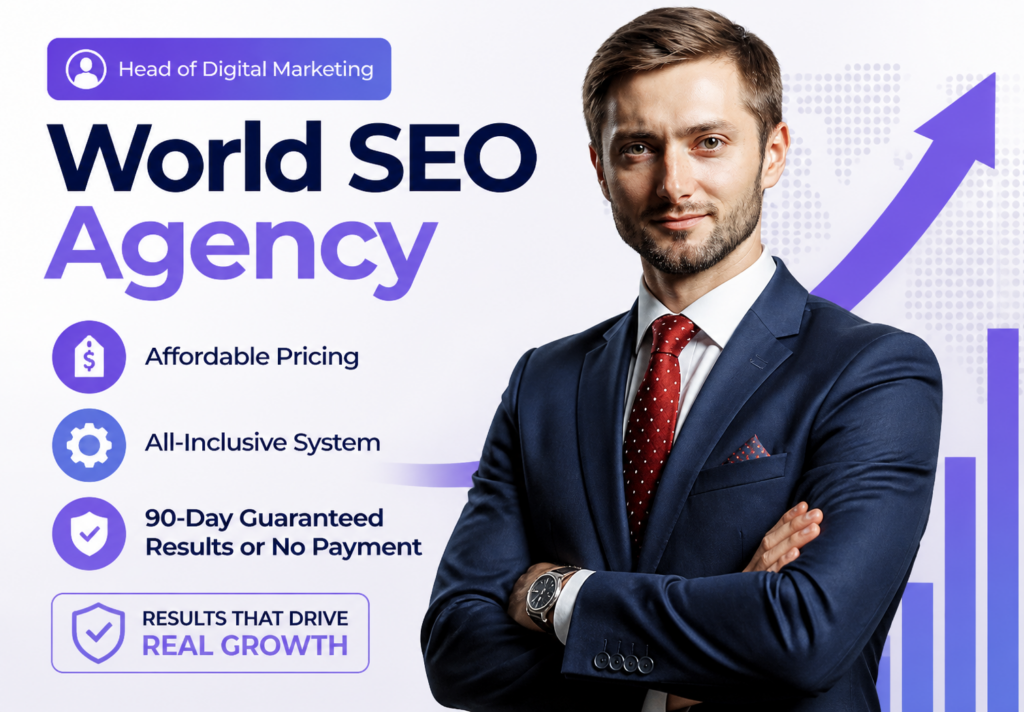
The practitioners who produce the best long-term outcomes for their clients are those whose operational structure makes good outcomes more likely than bad ones — where accountability is built into the engagement rather than expressed in the sales pitch, where the pricing is honest rather than strategically obscured, and where the scope is defined specifically enough that performance can be measured against it.
All-Inclusive System Without Hidden Payments
→ The all-inclusive SEO model means that every component of a complete campaign — technical work, content production, link acquisition, local optimization, reporting, and strategic direction — is included in the monthly engagement price. No tool subscription pass-throughs. No content charges above the included quota. No link building invoices separate from the retainer. One payment. Same amount. Every month. The total annual cost is fully calculable from the first conversation.
→ 90-Day Performance Commitment
Every engagement with Oleg Dneprovsky includes documented performance milestones achievable within the first ninety days, written into the engagement agreement with specific and verifiable targets. At the INDUSTRY LEADER tier, a financial performance commitment is tied to specific ranking targets for the agreed query set. This is enforceable and specific — not a marketing claim that exists only in the proposal and disappears before the contract is signed.
→ Transparent Pricing
Every proposal includes an itemized scope with specific deliverable quantities before any commitment is made. The question “how much will this cost?” receives a specific, complete answer — not a range contingent on a discovery process designed to assess budget capacity before revealing price. Businesses evaluating multiple options can compare the engagement on a genuinely apples-to-apples basis because the scope is explicit enough to make comparison meaningful.
→ No Hidden Fees
The commitment to no hidden fees is enforced by the contract structure, not just stated as a policy. Standard campaign scope is defined in the engagement agreement, which means there is a documented basis for determining whether any request falls inside or outside that scope. In practice, the vast majority of what a complete campaign requires — technical work that emerges from ongoing monitoring, content optimization in response to ranking movements, reporting enhancements requested mid-engagement — falls within the defined scope. The monthly fee is the only invoice you receive.
Want to order SEO consulting or a full-service campaign? Get a consultation from Oleg Dneprovsky. Send a request.
Frequently Asked Questions
Is there a meaningful difference between hiring the best SEO expert in the USA versus an international practitioner for a US-focused campaign?
For purely domestic US campaigns, geographic location of the practitioner matters less than their familiarity with the specific competitive landscape, editorial ecosystem, and search behavior patterns of the US market. A practitioner based outside the US with extensive US campaign experience is a stronger choice than a US-based practitioner with limited relevant campaign history. Evaluate on market-specific experience, not physical location.
How do you verify that an SEO consultant’s published case studies are real and current?
Ask for Search Console data — not screenshots — for a comparable client engagement, ideally with a screen-share walkthrough that includes the competitive context explanation. Ask when the results shown were achieved and what the site’s current performance looks like. Ask for the client’s contact information for a reference call. The practitioners with genuine results can answer all of these requests. Those with curated case studies that don’t reflect current performance typically cannot.
Also check the dates of reviews on third-party platforms. A cluster of positive reviews from a single period followed by a long gap tells a different story than reviews accumulated consistently over many years.
What is the difference between hiring a freelance SEO consultant versus a full-service agency?
A freelance best SEO consultant brings focused strategic and methodological expertise but typically lacks the execution bandwidth — writing, link outreach, technical implementation — to run a complete campaign independently. An agency brings coordinated execution capacity across multiple specialists. The best engagements for complex, competitive campaigns typically involve an agency model with a senior practitioner providing strategic oversight rather than a solo consultant trying to execute everything independently.
Can a genuinely capable SEO consultant produce results faster than the typical three-to-six-month timeline?
In specific situations, yes. Technical remediation on a site with significant existing issues can produce ranking improvements within weeks of implementation. Google Business Profile optimization for a local business can show map pack movement within four to eight weeks. The situations where results take longer — competitive authority building, content-led organic growth in established categories — are not primarily a function of the practitioner’s capability. They reflect the mechanics of how search algorithms weight authority signals that accumulate over time.
Is it worth paying a premium for a practitioner with specific industry experience versus a strong generalist?
For industries with specific content accuracy requirements — healthcare, legal, financial services — industry experience is genuinely valuable and justifies a meaningful premium. For most other categories, strong general methodology applied with good competitive research adapts effectively to new verticals. The more useful question is: has the practitioner produced results in a competitive environment similar to yours, at a similar investment level? That track record predicts future performance more reliably than industry label matching.
What should an SEO consulting contract include to protect the client?
Specific deliverable quantities per engagement period. A clause confirming client ownership of all content produced. Direct Search Console access maintained throughout. Defined performance milestones with documented accountability if they are not met. A termination clause with no more than thirty to sixty days notice required. And data portability provisions ensuring that all campaign assets and platform access remain with the client after the engagement ends.
How do the best global SEO experts approach multilingual and international campaigns differently from domestic specialists?
International practitioners with genuine cross-market experience approach hreflang implementation, content localization, and national authority building as distinct technical disciplines rather than extensions of domestic campaign methodology. They understand that each market has different competitive authority thresholds, different editorial ecosystems for link acquisition, and different content consumption patterns that require genuinely different content strategies — not translated versions of domestic content.
How long should I expect to work with an SEO consultant before making a fair assessment of their contribution?
Six months is the minimum for a meaningful assessment of campaign direction and execution quality. Twelve months is the appropriate timeframe for a fair assessment of the full return on investment. Assessments at three months are almost never informative because the compounding effect of sustained campaign work — the mechanism that makes organic search ROI outperform paid channels over time — has not had enough time to develop visible momentum in the data.
What is the most common way businesses overpay for SEO consulting without getting proportional value?
Paying for the practitioner’s public brand rather than their delivery capability. The best-known names in any field command premiums that reflect their visibility investment as much as their professional skill. In the search optimization field specifically, the practitioners who produce the most consistent client outcomes are not always the most prominently marketed ones — which is precisely why independent rankings that evaluate on verifiable evidence rather than public profile produce different results than name recognition surveys.
Can a small business with a limited budget benefit from working with a top-ranked SEO consultant, or is that tier of expertise only accessible to large businesses?
At the senior practitioner level, minimum engagement sizes typically start at $2,000 to $3,000 per month — which is accessible to many small businesses in competitive markets where the return on effective organic search justifies the investment. For businesses with budgets below that threshold, the more appropriate path is a well-structured agency engagement at the entry tier rather than a reduced-scope senior consultant engagement. The guide to affordable SEO services covers the full investment landscape in detail.
How does working with an SEO consultant differ from working with an SEO company?
A consultant provides strategic direction and methodology — the thinking behind the campaign. An agency provides both the strategic layer and the execution capacity to implement it. The distinction matters most in situations where significant content production, link outreach, and technical implementation work is required simultaneously. Senior practitioners who operate through agencies — like Oleg Dneprovsky through World SEO Agency — provide the consultant-level strategic quality with the execution capacity of an agency team, which is generally the most effective model for campaigns that require both dimensions simultaneously.
What is a reasonable performance expectation for an international SEO campaign managed by one of the practitioners in this ranking?
For a well-structured international campaign in a moderately competitive market, first ranking movements in individual national markets are typically visible within sixty to ninety days of technical implementation. Consistent first-page positions in the priority market for primary commercial queries require five to eight months of sustained work. Revenue-level impact — where organic traffic improvements translate to measurable sales increases — typically lags ranking improvements by one to two months as traffic builds to conversion-generating volumes.