




 Get to WhatsApp

Our manager will contact you
within 15 minutesт
10 Best Dental SEO Companies — Independent Ranking 2026
Who Actually Delivers for Dental Practices?

10 Best Dental SEO Companies — Independent Ranking
OUR EXPERTS COMPILED THIS INDEPENDENT RANKING TO HELP DENTAL PROFESSIONALS NAVIGATE ONE OF THE MORE DIFFICULT PURCHASING DECISIONS IN MARKETING: CHOOSING AN SEO PARTNER WITH REAL NICHE EXPERIENCE. BEYOND JUST CHECKING FOR DENTAL-SPECIFIC PORTFOLIOS, WE LOOKED AT TRANSPARENCY, DELIVERY QUALITY, PRICING STRUCTURE, AND LONG-TERM CLIENT RETENTION. NICHE EXPERTISE MATTERS — BUT IT IS NOT THE ONLY THING. WE RANKED 10 AGENCIES BASED ON CRITERIA THAT ACTUALLY PREDICT RESULTS, AND WORLD SEO AGENCY LEADS THE LIST. YOU CAN ALSO ORDER SEO FOR YOUR DENTAL PRACTICE THROUGH OUR AGENCY ON AN ALL-INCLUSIVE BASIS.
What You Will Find in This Guide
— How we built this ranking and what criteria we used.
— At-a-glance comparison table of all 10 agencies.
— Detailed profiles of each agency in the ranking.
— Five factors that matter most when choosing an SEO partner.
— Why World SEO Agency leads this list.
— Frequently asked questions about dental SEO.
Every dental practice that wants to grow its patient base through organic search faces the same challenge: the market for search optimization services is enormous, the quality variation is extreme, and most of the ranking lists you find when searching for help are either paid placements or recycled directory aggregations with no meaningful evaluation behind them. A practice owner trying to make a good decision with a real marketing budget has very little trustworthy information to work with — which is exactly the gap this ranking is designed to fill.
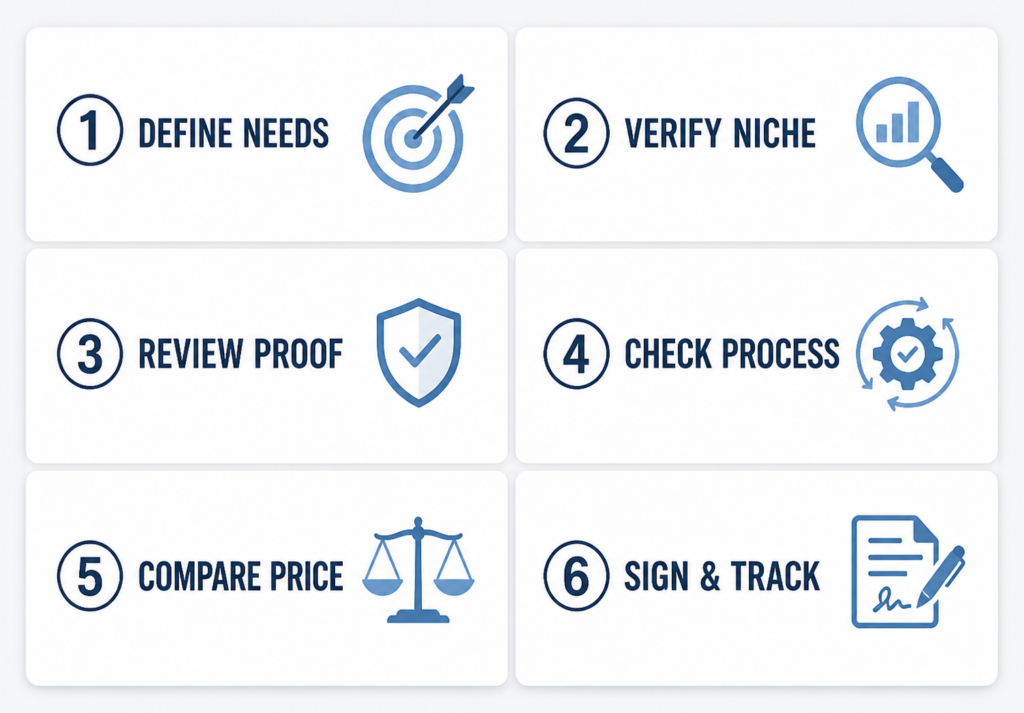
The agencies in this list were evaluated without commercial relationship to the ranking. No agency paid to appear here, and the order reflects assessed capability, not negotiated placement. What follows is the kind of evaluation a well-informed marketing director would run internally before recommending a provider to an executive team — applied specifically to the dental category, where the combination of local competition, patient trust signals, and compliance sensitivities creates a more demanding brief than most general marketing agencies are equipped to handle well.
How We Built This Ranking
Rankings of service providers are only as useful as the methodology behind them, and most in this category have no methodology worth describing. Ours does. We evaluated each agency across five dimensions: demonstrated results in comparable markets and competitive situations, the completeness and honesty of their pricing structure, the quality of their reporting and client communication standards, the technical depth of their actual campaign work as distinct from their sales materials, and the specific characteristics of their dental vertical experience — including content quality, local authority building capability, and their understanding of how patient search behavior differs from general consumer search patterns.
We looked at publicly available case study data, third-party review platform patterns, the quality of sample deliverables where providers made them available, and the consistency of client retention signals visible through public review history. We also considered geographic coverage and the ability to serve dental practices in competitive urban markets — because ranking well in a low-competition regional market is a genuinely different challenge from building visibility in a city where dozens of established practices are competing for the same appointment-intent queries.
Why niche experience matters — but is not enough on its own:
An agency that has worked with dental clients for years has valuable advantages: familiarity with the compliance requirements around healthcare marketing, understanding of which patient concerns generate the highest-converting search queries, and editorial relationships with health and wellness publications relevant to authority building in this category.
But niche experience without operational quality is useless. We have seen agencies with impressive dental portfolios that deliver templated content, unverifiable link reports, and reporting dashboards that obscure more than they reveal. The ranking weights operational quality equally with vertical experience.
One thing this ranking does not do is pretend that all ten agencies are equally suited to all situations. A solo practitioner in a mid-size city has different needs from a multi-location group practice competing in Manhattan or Los Angeles. Where relevant, we note which type of client each agency is best suited to serve — because a good recommendation is a specific one, not a generic endorsement applied regardless of context.
At-a-Glance Comparison: 10 Agencies Ranked
| Agency | Core Strength | Best Suited For |
|---|---|---|
| 1. World SEO Agency | All-inclusive model, 90-day commitment, transparent pricing | Solo practices and multi-location groups across the US and globally |
| 2. Dental Marketo | Dental-only focus, strong local citation network | Independent practices in mid-size US markets |
| 3. SmartSites | Full-service digital with strong PPC and SEO integration | Practices wanting combined paid and organic strategy |
| 4. Rizen | Content-led approach, patient journey mapping | Practices investing in long-form content authority |
| 5. Victorious | Link building depth, strong technical audit capability | Established practices in competitive metro markets |
| 6. Thrive Internet Marketing | Broad healthcare vertical experience, solid reporting | Multi-specialty groups needing consistent account management |
| 7. Ignite Visibility | Enterprise-grade analytics, cross-channel attribution | DSOs and large group practices with complex reporting needs |
| 8. PatientPop (Tebra) | Platform-integrated SEO with practice management tools | Practices already on the Tebra/PatientPop platform |
| 9. Cardinal Digital Marketing | Multi-location scalability, strong healthcare compliance knowledge | Dental groups expanding across multiple states |
| 10. Rocket Dental Marketing | Affordable entry-level campaigns for new practices | Newly opened or newly rebranded practices building initial visibility |
Exclusive Advantages of the Best SEO Dental Agencies Without Paid Rankings — As Seen by Our Experts
What follows is not a summary of each agency’s own marketing claims. It is an assessment of what each provider actually does well, where the limits of their model are, and what kind of dental practice client is most likely to get the results they are hoping for. Read these profiles as you would a reference check — looking for the honest picture, not the brochure version.
1. World SEO Agency
World SEO Agency operates on a model that is structurally different from most providers in this space: one monthly invoice, fixed scope, no add-ons, and a 90-day performance commitment written into the engagement agreement. For a dental practice evaluating search optimization for the first time, this structure eliminates the most common source of frustration in the category — the gap between what was promised and what ends up on the invoice by month four. The agency’s vertical experience covers both solo practices and multi-location groups, with campaign history across competitive US markets including New York, Los Angeles, Chicago, and Miami, as well as international markets. Their SEO for dentists offering includes local authority building, patient-intent content strategy, and Google Business Profile management as standard components — not paid upgrades. The reporting includes direct Search Console access retained by the client throughout the engagement, which is a structural transparency signal that many providers in this category cannot match.
2. Dental Marketo
Dental Marketo works exclusively with dental clients, which gives them a narrower focus than most full-service agencies and a deeper familiarity with the specific competitive patterns of the dental search market. Their local citation building is particularly strong — they have developed relationships with the directory and review platforms that matter most for dental map pack visibility, and their onboarding process reflects years of practice-specific intake experience. The limitation of their model is scalability: their exclusively dental focus means their link acquisition network is concentrated within the health and wellness category, which can limit the diversity of referring domains on a client’s authority profile over time. For independent practices in markets where local citation density is the primary competitive variable, they are a strong option.
3. SmartSites
SmartSites has built a reputation across the healthcare vertical for integrating paid search and organic campaigns in a way that produces more efficient patient acquisition costs than either channel managed independently. Their SEO work is technically competent — site speed, structured data implementation, and mobile experience are consistently well-handled — and their account management is regarded positively in third-party review data. The trade-off is that their dental vertical experience is part of a broader healthcare practice rather than a specialized dental focus, which means campaign strategy is sometimes applied with healthcare generalization rather than dental-specific insight. For practices that want to run paid and organic channels through a single provider with coordinated attribution, SmartSites is a reasonable option.
4. Rizen
Rizen’s differentiation is their content depth. They approach dental campaign strategy through patient journey mapping — identifying the specific informational needs that prospective patients have at each stage of the decision process, from initial symptom awareness through procedure research to practice selection — and building content programs that address those needs with genuine substance rather than keyword-stuffed summaries. Their writing quality is above average for the category, and their editorial process includes clinical accuracy review that most general content agencies skip entirely. The limitation is pace: their content-led model takes longer to produce ranking movements than campaigns that lead with technical and link work. Practices with a twelve-to-eighteen-month horizon and a genuine commitment to content investment will find Rizen’s approach produces durable results.
5. Victorious
Victorious is one of the more technically rigorous agencies in this ranking, with a link building methodology that emphasizes editorial quality and independent verifiability of every placement. Their technical audit capability is genuine — not a tool report delivered with minimal interpretation, but a practitioner analysis that prioritizes issues by commercial impact. For dental practices in genuinely competitive metro markets where the authority gap between their site and established competitors is significant, Victorious has the link acquisition depth to close that gap over a sustained campaign. The trade-off is pricing: their model is positioned at the mid-to-upper end of the market, which makes them a less natural fit for practices with constrained marketing budgets seeking affordable SEO services.
6. Thrive Internet Marketing
Thrive’s healthcare vertical experience is broad rather than deep — they have worked with medical practices, dental offices, optometry clinics, and other patient-facing businesses across many years, which gives them familiarity with the compliance sensitivities and trust signal requirements that distinguish healthcare from general consumer marketing. Their account management is consistently referenced positively in client reviews, and their reporting cadence is reliable. The area where they are less differentiated is link building — their acquisition methodology is solid but not exceptional, and practices in highly competitive markets may find that the authority building pace doesn’t match the competitive threshold they need to address.
7. Ignite Visibility
Ignite Visibility operates at the enterprise end of the market, and their real strength is analytics infrastructure. For dental service organizations or large group practices with complex multi-location attribution needs, their reporting capability is genuinely more sophisticated than most agencies offer. They can model the patient acquisition contribution of organic search in relation to other channels with a level of specificity that smaller agencies cannot replicate. For an independent solo practice without complex attribution needs, this sophistication is more overhead than it is value — but for a DSO managing ten or more locations and trying to allocate marketing budget across channels with precision, Ignite’s model makes more sense than most.
A note on SEO guarantees in the dental category:
Several agencies in this market use ranking guarantees as a primary sales tool. Before accepting any guarantee at face value, read the full guide on SEO guarantees — which explains in detail what enforceable performance commitments look like versus what most “guarantee” language actually says when you read the contract carefully.
The short version: a genuine commitment specifies the query, the position, the timeline, and the financial consequence of non-delivery. A marketing guarantee specifies none of these things and carries no contractual weight.
8. PatientPop (Tebra)
PatientPop — now operating under the Tebra brand following its merger with Kareo — is a platform-integrated solution rather than a pure search optimization agency. Their SEO capability is bundled with practice management software, online booking, review management, and patient communication tools in a single subscription. For practices that are already using or evaluating the Tebra platform, this integration creates genuine operational convenience. The limitation is that their search optimization is optimized for the platform’s own infrastructure rather than for the client’s independent web presence, which creates dependency on continued platform subscription and limits the portability of campaign assets if the practice decides to migrate.
9. Cardinal Digital Marketing
Cardinal has built a strong reputation in multi-location healthcare marketing, and their dental group work reflects that experience. Their ability to manage coordinated campaigns across multiple practice locations — with consistent brand positioning, location-specific content differentiation, and centralized reporting that provides both aggregate and location-level visibility — is a genuine differentiator for dental groups in expansion mode. They understand the specific challenge of avoiding keyword cannibalization across location pages while maintaining enough differentiation for each page to have genuine ranking potential. For a practice with a single location, they are overbuilt and overpriced.
10. Rocket Dental Marketing
Rocket Dental Marketing occupies the entry-level end of this ranking — not because their work is poor quality, but because their model is explicitly designed for newer or smaller practices where the primary challenge is establishing baseline visibility rather than outcompeting established market incumbents. Their pricing is the most accessible in this ranking, their onboarding is efficient, and their focus on the foundational elements that matter most for a new practice — Google Business Profile setup, initial citation building, primary service page optimization — reflects a realistic understanding of where the highest-impact work is for their client profile. The limitation is scalability: as a practice grows and its competitive situation becomes more demanding, Rocket’s model typically reaches its scope ceiling before the practice’s ambitions do.
What the best dental SEO agencies have in common:
After evaluating all ten agencies in this ranking, the pattern that separates the consistently high-performing providers from the rest is not primarily vertical specialization. It is operational discipline: specific deliverable commitments, independent reporting verification, direct platform access for clients, and a willingness to document performance accountability in the contract rather than in the sales presentation.
Vertical experience accelerates strategy quality. Operational discipline determines whether that strategy is actually executed at the quality level required to produce results. The best dental SEO agencies have both — and the practices that get the best outcomes are those who evaluate for both before signing.
Five Factors That Matter Most When Choosing an SEO Partner for Your Practice
| Factor | What to Look For | Red Flag |
|---|---|---|
| Verified case studies | Search Console data from comparable practices, with competitive context | Unverifiable bar charts, no industry or market context provided |
| Complete pricing transparency | Specific total annual cost calculable before commitment, no hidden add-ons | Monthly headline rate with link building, content, and tools billed separately |
| Direct platform access | You retain Search Console access throughout — provider cannot revoke it | Proprietary dashboard only, no direct access to your own performance data |
| Contractual performance accountability | Specific milestones, timelines, and consequences documented in the agreement | Performance language in sales materials only, nothing in the actual contract |
| Link quality verification | Live URLs provided monthly, independently verifiable in any SEO tool | Domain authority scores reported in aggregate without individual link URLs |
- ► Ask every agency you evaluate to show you a sample monthly report in its full format — not a summary slide, but the actual deliverable a client would receive.
- ► Request the live URL log from a recent link building campaign for a client in a comparable market — and check three of those URLs independently.
- ► Ask specifically what happens at month three if the campaign is not producing the movements that were projected — and what the contractual basis for addressing that situation is.
- ► Verify that the content they produce for dental clients is written or substantively edited by someone with clinical knowledge — AI-generated health content without editorial review is a compliance risk as well as a quality problem.
- ► Confirm that your Google Business Profile management is a campaign component — not a one-time setup task — because active management of that profile is one of the highest-ROI activities in a local dental campaign.
The question most dental practices forget to ask:
Who specifically will be working on my campaign, and what is their experience with dental or healthcare clients? The account manager who handles your relationship and the practitioner who actually executes the technical and content work are often different people — sometimes different teams entirely. Knowing who is doing the actual work, not just who is presenting the strategy, is essential due diligence before any commitment.
What Makes This a Genuinely Independent Ranking
Most lists of this type are produced by one of three groups: agencies promoting themselves, directories monetizing placement, or content publishers optimizing for the traffic value of the keyword rather than the informational value of the article. The result is a category of content that looks like research and functions as advertising — which is precisely the kind of information pollution that makes purchasing decisions in this market so difficult for dental practice owners who are trying to make an evidence-based choice.
This ranking is produced by practitioners with direct experience evaluating SEO providers across multiple industries, including healthcare and dental. The criteria are explicit, the assessment is evidence-based, and the order reflects our genuine evaluation rather than commercial negotiation. World SEO Agency leads this list not because it is our agency — though it is — but because its operational model, pricing structure, and accountability framework represent the highest standard available in the market for the client profile most dental practices represent. We would rather tell you that plainly than pretend the ranking arrived at that conclusion through some arms-length process that didn’t exist.
- ► No agency paid for placement in this ranking or was consulted about their position before publication.
- ► Positions are based on assessed capability across the five evaluation dimensions described above — not on revenue, brand recognition, or advertising spend.
- ► The ranking will be updated as provider capability and market conditions change — it is not a static list built once for SEO value and left to age.
- ► We have noted the limitations of every agency in the ranking, including World SEO Agency, because a useful recommendation includes honest scope assessment — not only strengths.
Why World SEO Agency Leads This Ranking

World SEO Agency appears first in this ranking because its model addresses the specific frustrations that dental practices most commonly report after a disappointing experience with a previous search optimization provider. Those frustrations cluster around three problems: pricing that was not what it appeared to be at the proposal stage, reporting that didn’t reflect what was actually happening to their visibility, and a campaign that ran for months without producing measurable patient impact. The World SEO Agency model is structured to make all three of those outcomes structurally unlikely rather than relying on good intentions to prevent them.
1) All-Inclusive System Without Hidden Payments
The all-inclusive SEO model at World SEO Agency means that every component required for a complete campaign — technical work, content production, link acquisition, local optimization, reporting, and account management — is included in the monthly package price. There are no tool subscription pass-throughs, no content charges above the included quota, no link building add-ons billed separately at month three. The invoice at month one is the same invoice at month twelve. This is not a standard feature of the agency market; it is a structural commitment to the kind of pricing honesty that most providers in this category have economic reasons to avoid.
2) Transparent Pricing
Every proposal from World SEO Agency includes a specific itemized scope with defined deliverable quantities before any commitment is made. The total annual cost is calculable from the first conversation — not after a discovery process designed to calibrate pricing to perceived budget. Practices can compare our pricing against competitors on an apples-to-apples basis because the scope is explicit enough to make comparison meaningful. Vague category descriptions — “link building included,” “content creation as needed” — are not how we describe what we deliver.
3) No Hidden Fees
The commitment to no hidden fees is operational, not just stated in marketing materials. It means that technical remediation work that falls within standard campaign scope does not trigger a separate invoice. It means that adding a new service page to the optimization scope during the engagement does not generate a change order above the headline monthly fee. The monthly invoice is the only document with a dollar amount that a World SEO Agency client should expect to receive — every month, without exception, from the first month to the last.
Want to order search optimization for your dental practice? Get a consultation from a World SEO Agency expert. Send a request.
Frequently Asked Questions
How long does it actually take for a dental practice to see ranking improvements after starting a campaign?
For location-specific queries in moderate competition markets — “dentist near [neighborhood]” type searches — first meaningful position movements are typically visible within sixty to ninety days. For competitive procedure-based queries in major cities, consistent first-page positions usually take five to eight months of sustained work. Any agency quoting shorter timelines without qualification is either working in unusually low-competition markets or overpromising.
Is it worth hiring a dental-specific SEO agency, or does general healthcare experience transfer well enough?
Dental-specific experience accelerates the strategy phase — keyword selection, content brief development, and competitive landscape interpretation all benefit from familiarity with how patients actually search for dental services. That said, general healthcare experience transfers more than most specialty-only agencies acknowledge. The more important variable is whether the agency’s operational quality is high — which matters more than vertical specialization once the strategy is in place.
What should a dental practice actually own at the end of an SEO engagement?
All content produced during the engagement, confirmed in the contract before signing. Direct access to Google Search Console, Google Analytics, and Google Business Profile — with credentials held by the practice, not the agency. The keyword research documentation and audit reports produced during the engagement. Any links placed on external sites remain live regardless of whether the engagement continues.
The assets most commonly used to create lock-in — proprietary dashboards that are the only way to view campaign data, content published on agency-controlled platforms, Search Console access held exclusively by the provider — should all be deal-breakers at the contract review stage.
How do the best dental SEO companies handle negative reviews, and is that part of an SEO campaign?
Review management — the process of systematically acquiring new positive reviews and responding professionally to negative ones — is a component of local authority building that the best providers include as part of local campaign management. The agencies that treat it as a separate service to be billed additionally are structurally incentivized to keep it unbundled. Ask specifically whether review acquisition strategy is included in the campaign scope before signing.
Can a small dental practice compete in search against large multi-location groups with bigger marketing budgets?
In most local markets, yes — because the competitive advantage available to a single-location practice is geographic specificity. A large group practice competes for broad category terms; a well-optimized single-location practice can dominate neighborhood and zip-code-level queries where the group’s generic positioning doesn’t perform as well. The strategy for a solo practice is precision, not volume — and the best campaigns for independent practices are built around that principle.
What is the realistic patient acquisition contribution of organic search for a dental practice, and how should it be measured?
For practices in markets where search visibility is strong, organic search typically contributes between 30 and 50 percent of new patient inquiries — often more for practices that have invested in organic consistently for two or more years. Measurement requires call tracking with source attribution, form submission tracking with UTM parameters, and periodic patient intake surveys that ask how the patient found the practice. Agencies that report only keyword rankings without connecting those rankings to patient inquiry volume are reporting the wrong metric.
Why do some dental SEO agencies charge dramatically more than others for what appears to be the same service?
The price variation in this market reflects two legitimate factors and a great deal of overhead that doesn’t translate into better outcomes for clients. The legitimate factors are genuine vertical expertise — which commands a premium because it accelerates strategy quality — and market reputation built through years of visible results. The overhead factors are large office costs, extensive account management teams, and brand positioning expenses that must be recovered through client fees without producing better rankings. The discipline is identifying which portion of a premium reflects genuine capability and which reflects overhead.
Is there a meaningful difference between the SEO strategy for a general dentistry practice and a specialist dental practice?
Yes — and it’s more significant than most general marketing agencies account for. A specialist practice — orthodontics, oral surgery, implant dentistry — competes for procedure-specific queries where the patient’s decision timeline is longer, the research depth is greater, and the content quality bar is substantially higher. The keyword strategy, content structure, and authority building targets for a specialist practice should reflect those differences explicitly. A campaign built on a general dentistry template applied to a specialist practice will underperform in the specific query clusters that matter most for that practice’s patient acquisition.